Ortahisar Castle, Çavuşin, Paşabağ and Devrent: A Cappadocia Photo Route
A photo route through Ortahisar Castle, Paşabağ and Zelve, Devrent’s rock shapes and old Çavuşin: what to see, the best light, gear, drone and etiquette rules, and 2026 ticket notes.
Uçhisar gets the crowds, but some of Cappadocia’s best photos come from its quieter castles and villages. This route links Ortahisar Castle, the mushroom-capped chimneys of Paşabağ, the old cave town of Zelve, the strange shapes of Devrent and the half-abandoned cliff village of Çavuşin. Agencies sell much of it as the Red (or North) Tour, but it’s easy to do at your own pace. Below are the sights, the best light for each and the rules every photographer should know.
Quick facts
- Where: all within a short drive of each other in the triangle between Göreme, Ürgüp and Avanos.
- Best light: early morning and the last two hours of daylight. Blue hour suits Ortahisar.
- Duration: a full day at a photographer’s pace, or half a day for the highlights.
- Cost: Zelve and Paşabağ share one Ministry ticket, €12 for foreign visitors in 2026, and MüzeKart is valid. Devrent is free to visit. Ortahisar Castle is a municipal site with a ticket reported at about 100 TL in 2026, and the Museum Pass isn’t accepted there.
Ortahisar Castle
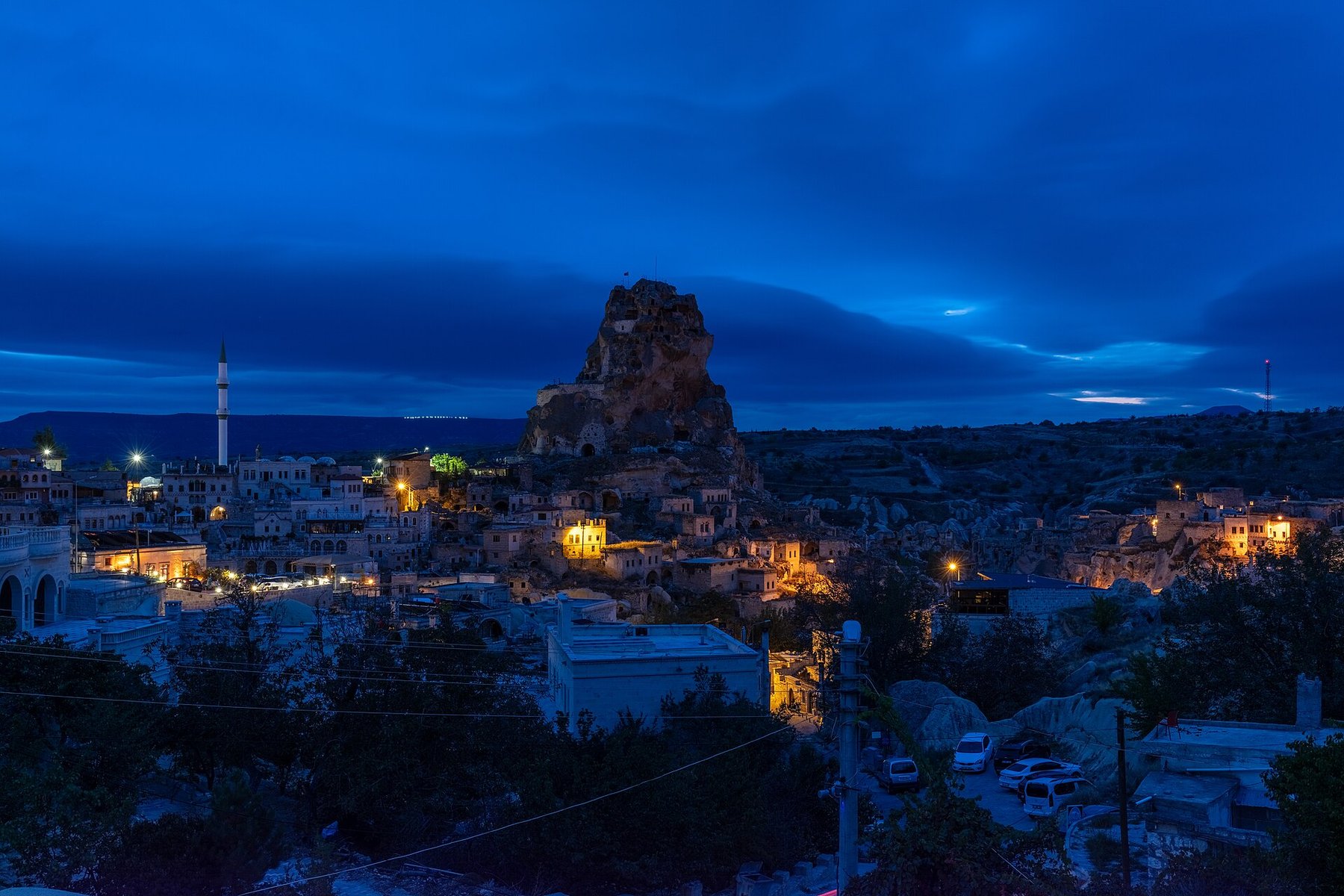
Ortahisar means “middle castle”. Its rock rises about 90 metres above a village between Göreme and Ürgüp that still feels lived-in rather than staged. Inside, steps and short passages lead to a summit viewpoint over the valleys towards Uçhisar. Opening hours have been reported at roughly 08:00–19:00 in summer, shorter in winter, and the castle may close in icy or stormy weather.
For a picture of the whole rock, walk a few minutes out of the village to the viewpoints along the Ürgüp road. In the lanes below, look for the deep tuff cellars that were carved to store lemons, potatoes and other produce; some still work as natural cold stores.
Paşabağ (Monks Valley) and Zelve
Paşabağ has some of Cappadocia’s most photographed fairy chimneys: tall cones wearing two or three basalt caps. Hermits once lived here, and one chimney holds a small chapel linked to St Simeon. A short drive up the road, Zelve spreads across three valleys of cave houses, churches and tunnels. People lived there until the 1950s, when erosion made it unsafe and the village moved.
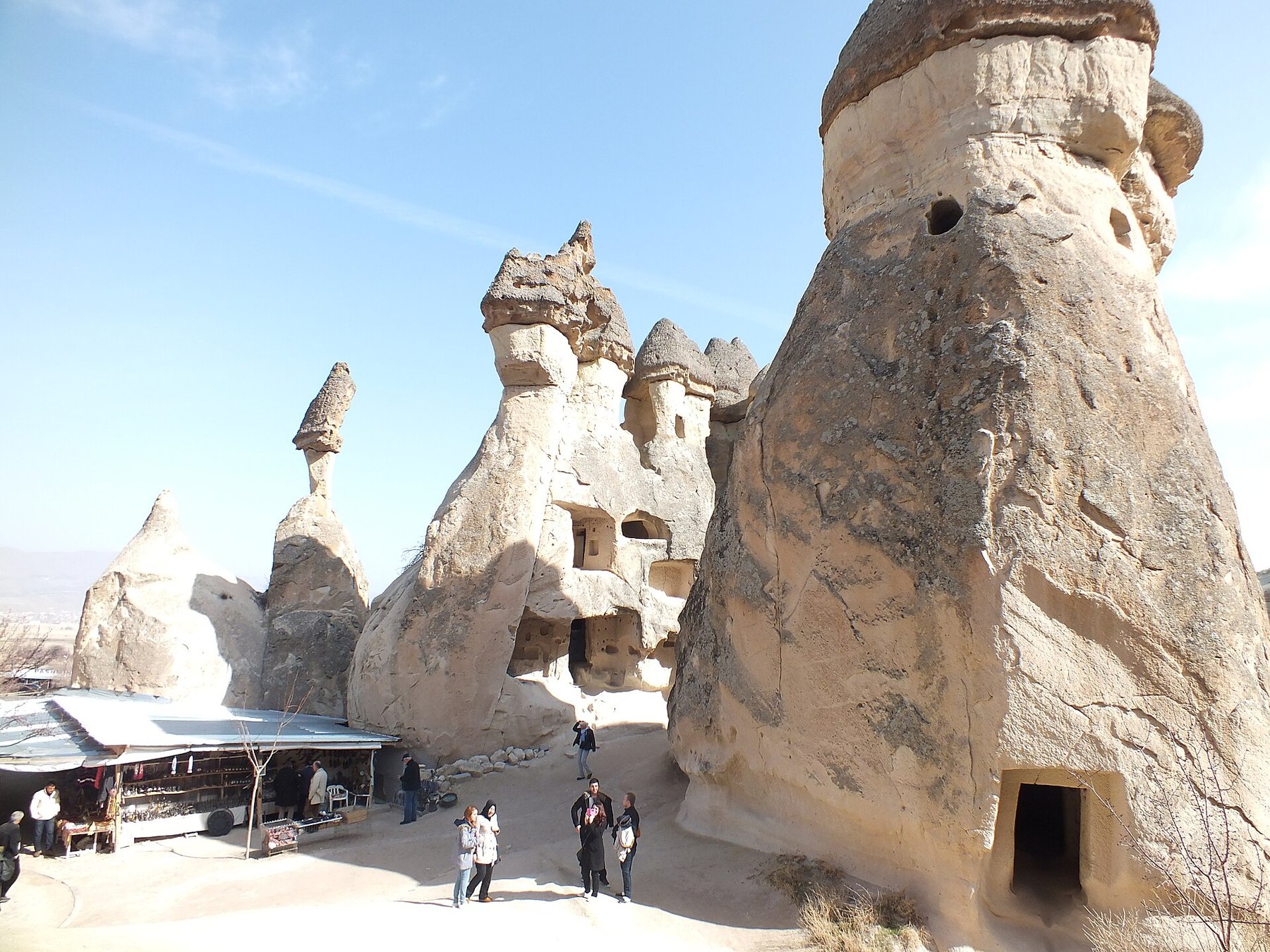
One ticket covers both sites. The Ministry’s list notes that Zelve’s Balıklı and Üzümlü churches are currently closed. Hours are roughly 08:00–19:00 in summer and until 17:00 in winter. Be at Paşabağ when it opens to photograph the chimneys before tour buses arrive, then move on to Zelve while it’s still cool.
Devrent (Imagination Valley)
On the road between Ürgüp and Avanos, Devrent has no capped chimneys, just smooth pink-grey cones and shapes that people love to name. The best known is the camel rock; others spot a seal, a Madonna or dolphins. You can wander freely from the roadside pull-offs. Please don’t climb the formations, because the soft tuff breaks easily.
Çavuşin
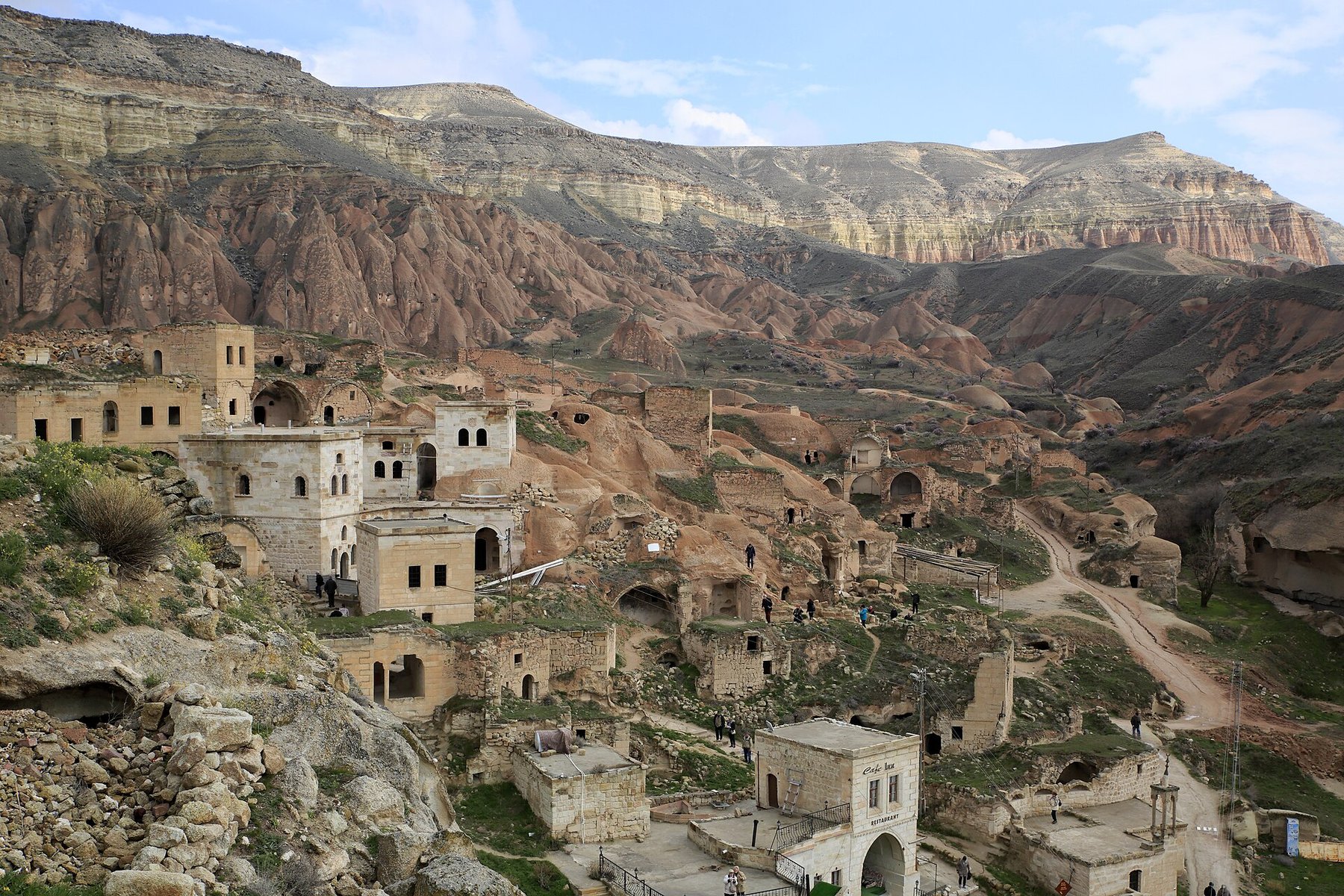
Çavuşin’s old quarter climbs a cliff full of cave houses and was largely abandoned after rockfalls. Near the top is the Church of St John the Baptist, one of the oldest in the region; recent reports say it’s closed for restoration, so plan to photograph it from outside. The newer village below has cafés and pottery shops, and it’s a trailhead for the Rose and Red valleys we cover in our valley guide.
Photography guide
Light and timing
- Sunrise: on flying days the sky fills with balloons; our balloon guide lists the best viewpoints. On this route, the roadside views at Çavuşin and Ortahisar work well.
- Midday: hard light flattens the rock. Use it for cave interiors, lunch and driving.
- Golden hour: the pink and cream tuff warms up, and Devrent and the Çavuşin cliffs look their best.
- Blue hour: the 20–30 minutes after sunset, when Ortahisar’s lights come on against a deep blue sky.
Gear and settings
- A wide-angle lens (16–24 mm) for chimneys up close, and a short telephoto (70–200 mm) to stack castle, village and hills in layers.
- A polarizer deepens the sky, though it can look patchy with very wide lenses.
- A small tripod for blue hour and for dark cave rooms.
- Dust gets everywhere, so change lenses out of the wind and carry a blower.
Rules and courtesy
- Drones: Turkey requires drones to be registered with the civil aviation authority (SHGM), and much of this area sits under balloon traffic. Check the current rules and permits before you fly, and never fly near balloons.
- People: ask before photographing locals, especially women and children, and stay out of courtyards and private doorways.
- Rock: keep to paths and don’t climb chimneys or cave walls. Erosion is exactly why Zelve was abandoned.
- Frescoes: switch off the flash inside painted churches.
For the classic Ortahisar shot, stand at a viewpoint on the Ürgüp road about 20 minutes after sunset. The sky still has colour, the village lights are on, and the exposure balances without heavy editing.
A one-day photo route
- 08:00: Paşabağ at opening time, then Zelve.
- Late morning: Devrent, on the way towards Ürgüp.
- Lunch: Çavuşin or Avanos, followed by a slow walk up old Çavuşin.
- Afternoon: a break while the light is harsh.
- An hour before sunset: climb Ortahisar Castle, then shoot blue hour from the Ürgüp road.
Tickets and opening hours change, so check current prices before going.
Photo credits: (1) Diego Delso, CC BY-SA 4.0, Wikimedia Commons. (2) Cobija, CC0, Wikimedia Commons. (3) Falk2, CC BY-SA 4.0, Wikimedia Commons.


