Ihlara Valley and Selime Monastery: The Green Tour Day Trip
A full-day guide to Ihlara Valley and Selime Monastery, the classic Green Tour: the canyon walk to Belisırma, frescoed rock churches, riverside lunch, tour or self-drive tips and official 2026 fees.
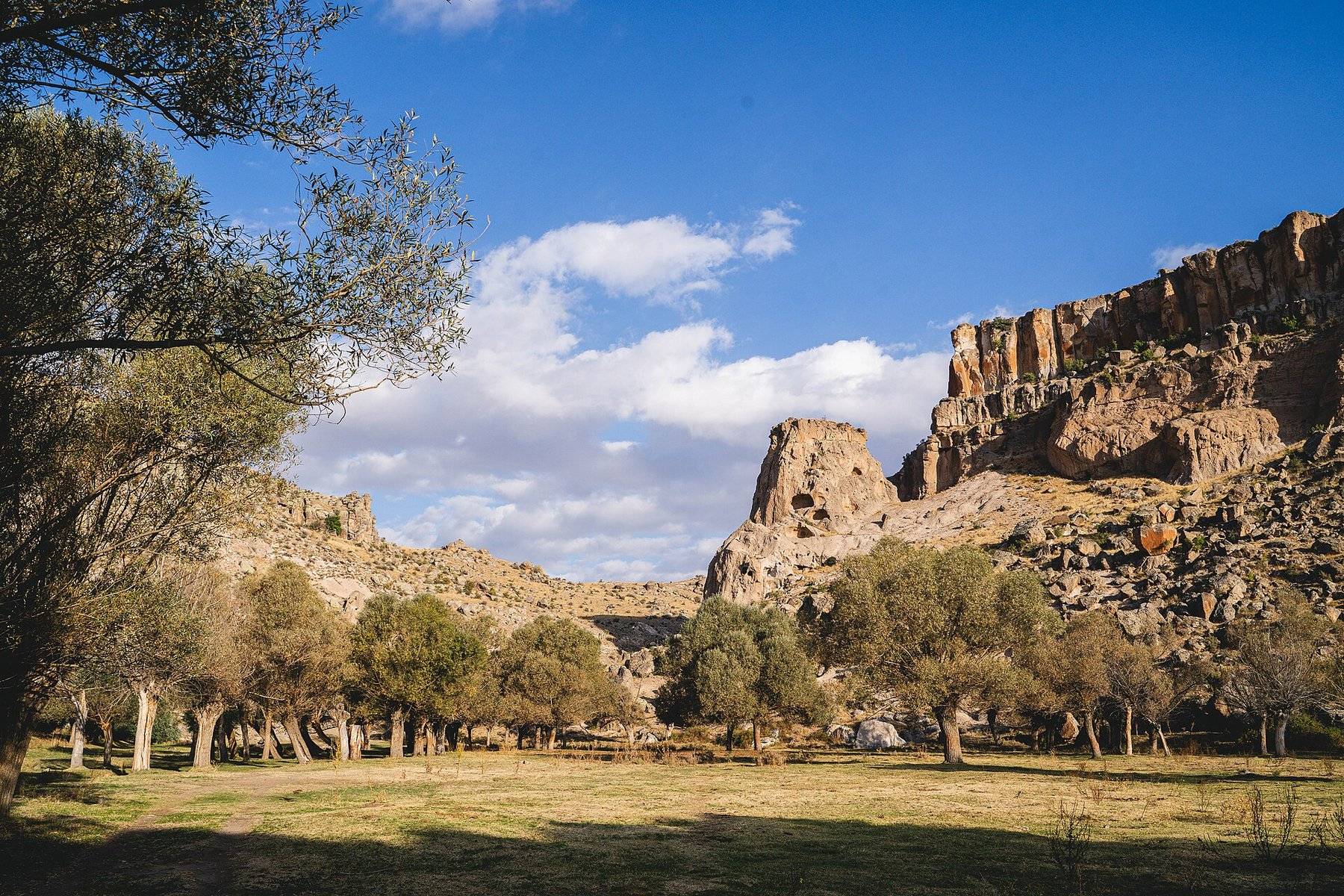
Most of Cappadocia’s famous scenery is dry rock and fairy chimneys. Ihlara is the surprise: a deep green canyon on the Aksaray side, where the Melendiz River runs under poplars and willows and Byzantine churches are cut into the cliffs. At its northern end, Selime Monastery fills an entire hillside. Agencies sell the pair as the “Green Tour”. This guide explains how to do it with a tour or on your own, what to look for on the trail, and the timing that makes a long day feel easy.
Quick facts
- Where: Aksaray province, around 90 minutes by road southwest of Göreme. The canyon runs about 14 km from Ihlara village to Selime.
- Best time: April to June and September to October. Riverside shade helps in summer; in winter the stairs can be icy.
- Duration: A full day from Göreme. The popular stretch from the main stairs to Belisırma is about 4 km, and walking the whole canyon takes 4–5 hours.
- Hours: The official site lists 08:30–19:00 from April to 1 October and 08:30–17:00 in winter, with ticket sales ending 30 minutes before closing.
- Cost: The Ministry’s 2026 foreign-visitor fee for Ihlara is €15, and Turkish citizens can enter with MüzeKart. Reports differ on whether Selime is free or covered by the Ihlara ticket, so ask at the gate.
Green Tour or on your own?
The Green Tour
Almost every agency in Göreme, Ürgüp and Avanos runs it. A typical day combines a panorama stop, one underground city (usually Derinkuyu or Kaymaklı), a guided walk along part of Ihlara, lunch by the river in Belisırma and a scramble around Selime. Some tours also stop at an onyx or jewelry shop. Packages differ, and entrance tickets are often extra, so ask exactly which sights, fees and meals are included.
Independently
There’s no direct bus from Göreme, and connections through Nevşehir and Aksaray are slow. A rental car or private driver gives you the most freedom: start early, walk one way and have the car waiting at the far end. The main entrance is on the Ihlara village side, while Belisırma and Selime have their own access points for shorter or one-way walks. Our heritage guide covers Derinkuyu and Kaymaklı in depth, so on this day treat an underground city as a short warm-up rather than the main event.
Walking the canyon
From the main entrance, a long staircase of roughly 380–400 steps drops you to the river. Most visitors then walk downstream to Belisırma on a mostly flat, shaded path. With church stops, allow 1.5–2 hours. Strong walkers can carry on past Yaprakhisar to Selime and cover the full canyon.
Churches to look for
- Ağaçaltı (Under the Tree) Church: close to the main stairs, with a painted dome and some of the valley’s best-preserved frescoes.
- Pürenliseki Church: a short climb up the cliff face, worth it for the view as much as the paintings.
- Kokar Church: a small church near the stairs with scenes from the life of Christ.
- Yılanlı (Snake) Church: known for its fresco of sinners being punished by snakes.
- Sümbüllü Church: its carved façade stands out on the cliff.
- Kırkdamaltı (St George) Church: further downstream, close to Belisırma.
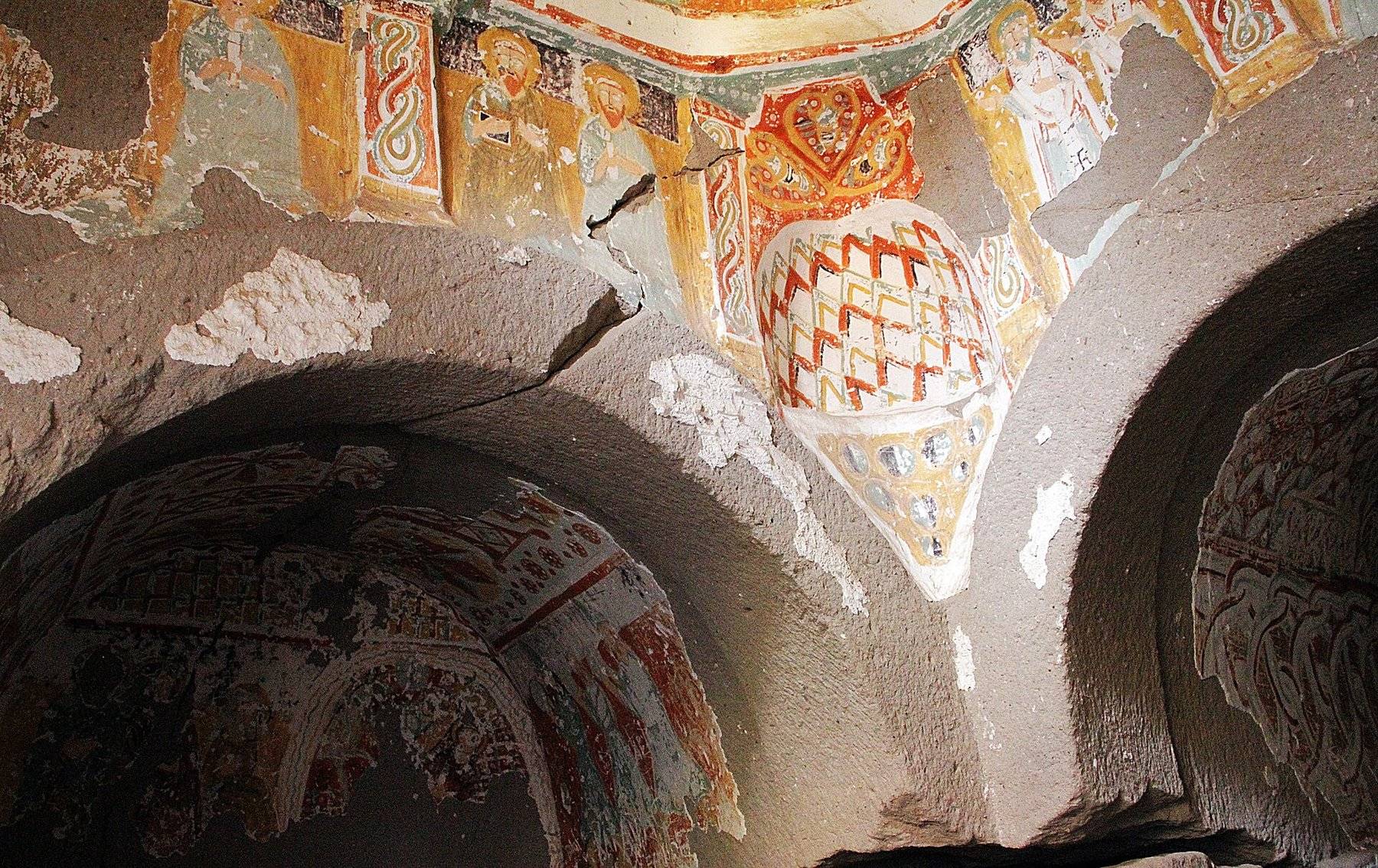
Many church entrances are unsigned, and some are reached by short, steep steps. Bring a phone light, because the interiors are dim, and keep the flash off near the old paintings.
Lunch in Belisırma
The village sits right on the river, and its restaurants set tables on wooden platforms over the water. Trout and simple grills are the usual menu. It’s the natural end of the classic walk, and drivers can meet you here.
Selime Monastery
At the northern end of the canyon, Selime is often described as the largest rock-cut monastic complex in Cappadocia. It is a whole hillside of rooms: a church with columns and aisles, a kitchen with a tall carved chimney, halls, stables and connecting passages. Expect steep, uneven steps and short tunnels, and allow about an hour. You’ll often read online that Star Wars was filmed here; there’s no reliable evidence for that, although the setting certainly looks like another planet.
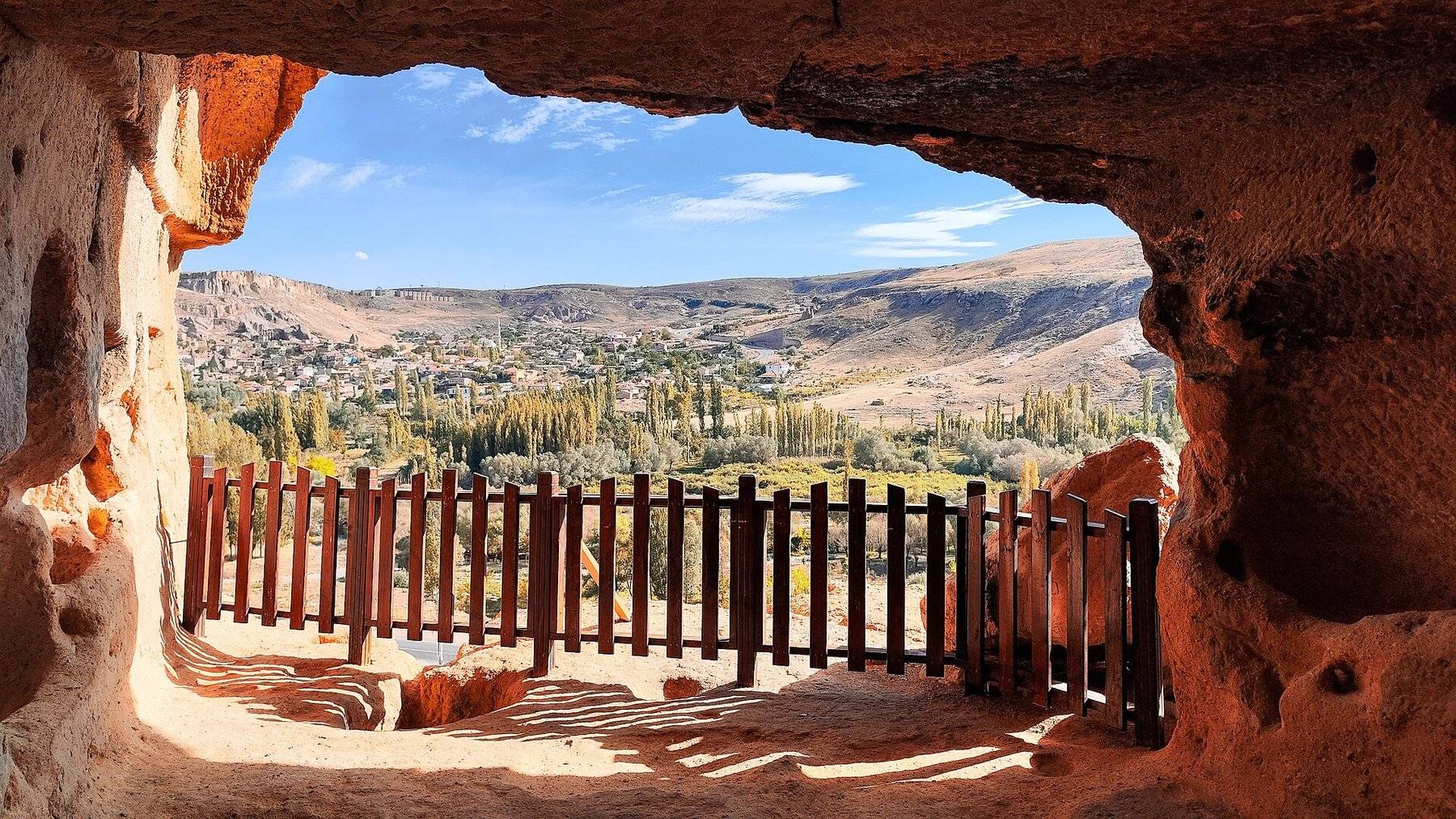
Late-afternoon light flatters the rock here. There are few railings, so hold children’s hands near the ledges.
Walk downstream, from the main stairs to Belisırma, and have your driver or tour meet you there. You only tackle the long staircase once, going down, and the walk ends with lunch by the river.
Nearby add-ons
- Güzelyurt and Monastery Valley: a former Greek village with rock churches, about 15 minutes from Ihlara. The Ministry’s 2026 foreign-visitor fee for Monastery Valley is €4.
- Mount Hasan: the volcano that dominates the drive. Its ancient eruptions laid down the rock the river later cut through.
- Nar crater lake: a small volcanic lake that some private tours add on the way back.
Must-know tips
- Shoes: grippy walking shoes. The path has stone sections and turns muddy near the river after rain.
- Water: carry at least a litre each, since refill points along the trail are few.
- Cash: bring Turkish lira for lunch, tea and small purchases in the villages.
- Daylight: in winter the site closes at 17:00 and dusk comes early, so start walking by early afternoon at the latest.
- Knees: the main staircase is the hardest part. If that worries you, enter at Belisırma and walk a shorter section.
- Passes: the Cappadocia Museum Pass generally doesn’t cover Ihlara, so budget for the ticket.
- Guides: a licensed guide helps you find the unsigned churches and explains what the frescoes show.
A sample day
Leave Göreme around 08:30 and make a brief underground-city stop on the way south. Reach Ihlara late in the morning and walk to Belisırma for lunch. In the afternoon, drive on to Selime and explore the monastery in warm light, then head back with Mount Hasan on the horizon. Fees and opening hours change, so check current prices before going.
Photo credits: (1) Andrada Boldis, CC BY-SA 4.0, Wikimedia Commons. (2) smus, CC BY 3.0, Wikimedia Commons. (3) Kharkil, CC BY-SA 4.0, Wikimedia Commons.


